Living with the Land
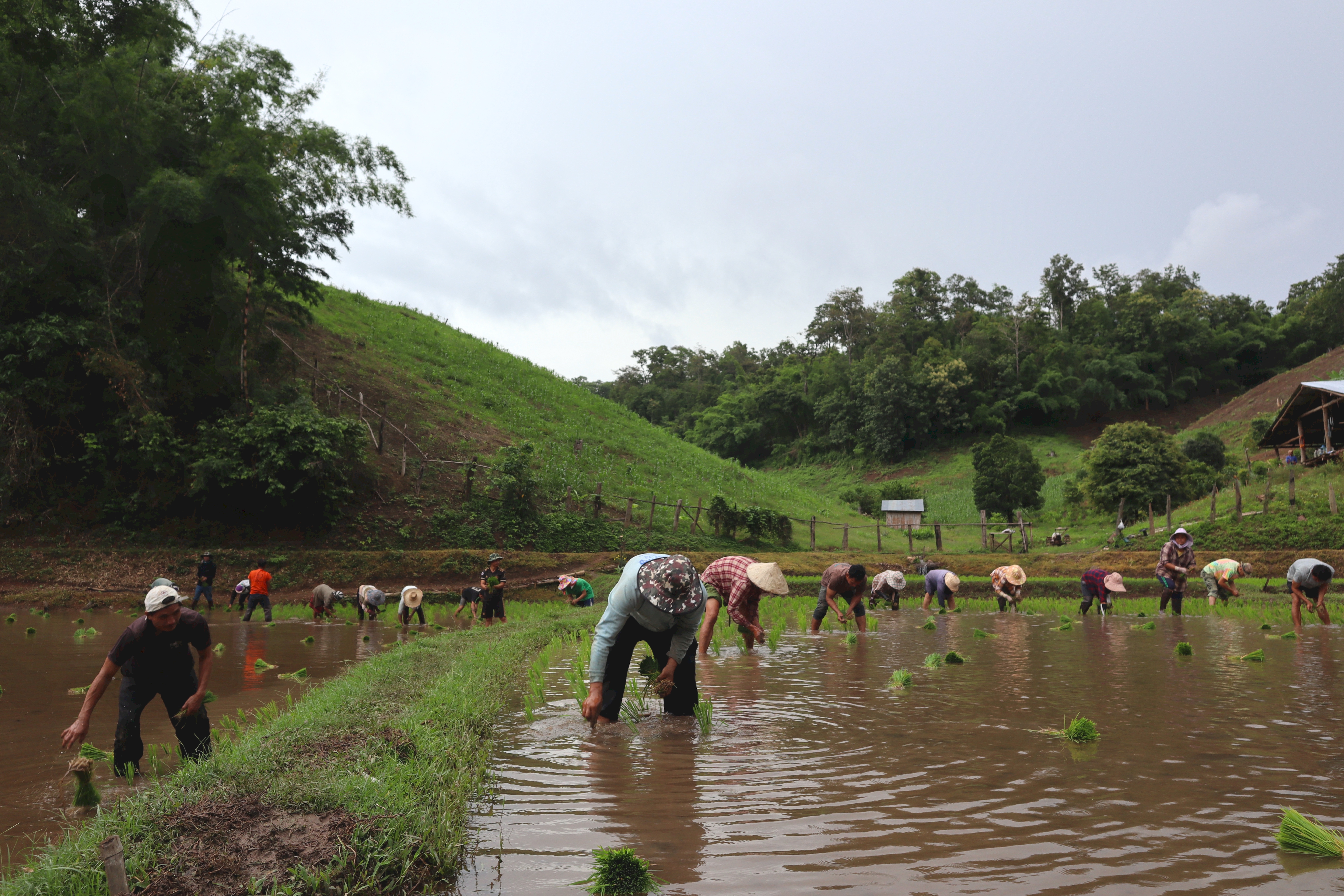
At about seven, we leave home and ride our motorbikes off into the misty morning. About half an hour later, we arrive at the village.
"O mue che pe," I greet him and his parents. "Orh mae," his father replies — come eat. We join him on the floor around a steamy bowl of rice, fresh vegetables and fish.
We take our first bites and feel the fresh flavours hit our taste buds, the warmth go down our stomachs. This morning, with blessings sought from the spirits, the villagers trudge and wade through the flooded paddies. Just as the sky began to drizzle, bit by bit with all the helping hands, the field was filled and full.
At a time of looming natural disasters, collapsing food security and ever-growing social disparities, there is much we can learn from indigenous communities about how we can use and protect our natural resources with kindness and ingenuity — treating our wildlife, as well as each other, with love and respect.
On a memorable trip to an indigenous Karen community called Pa Tung Gnam, our friends showed us their nature and culture, one tied to the rivers and shaped by the mountains. They shared with us their food, their home, and their beliefs in living with the land, passed down from ancestors and spirits that came before them.
forest | ˈfɒrɪst |
noun
land which is not acquired by any person under the Land Code (ie. all public land, whether or not it is forested)
"Thailand aims to increase its forest cover to 55% of total country area by 2037." (Thailand Forest Reference Level, 2021)
The land feeds, clothes, shelters and gives freely to all – but who gets to take? Those born on it or those who own it on paper?
When nature holds no boundaries, who do we call owners and who do we call encroachers, and who gets to decide?
Between 2013 and 2019, there have been more than 32,471 cases of forest encroachments, many of them brought against indigenous communities living in and around forest areas.
When communities like Pa Tung Gnam lose access and rights to the mountains and rivers they call home, they stand to lose not only their livelihoods and cultures, but a wealth of ecological knowledge and sustainable practices that the rest of us so urgently need.
Everyone now wants more land, for agriculture and cities as well as for conservation and carbon credits. These stories are part of a campaign I created – comprised of a learning trip, film, art exhibition and fundraising drive for the Mekong Rainforest Initiative, with the support of the Pulitzer Centre.
Dohee Kwon
Juan Qi An
Nuttawat Kasamvilas
Refield Lab
Sakson Rouypirom
Saranporn Rarunron
Sippakorn Khiaosanthia
Thanyathep Nantapramote
Vasavas Bhangsa-ard
William le Masurier